

For brand owners, packaging decisions are not just about containment. They are about competitiveness, credibility and future readiness.
As brands across FMCG categories rethink packaging for a more resource-conscious and circular future, pouches have become one of the most dynamic and strategically important formats on the market. They use less material than many rigid alternatives, fit naturally into refill and reuse models, and offer clear advantages in efficiency across the value chain.
As expectations around sustainability rise among consumers, retailers and regulators, simply moving away from rigid formats is no longer enough. Nor is mono-material alone. For Masterpress, the next opportunity lies in simplifying the pouch itself.
The packaging industry has already shown that it can move beyond traditional multi-material laminates. The next challenge is to reduce structural complexity further without compromising the performance modern brands expect. That is where Masterpress is focusing its innovation: non-laminated, single-layer pouch structures designed to streamline pack architecture while supporting recyclability and long-term circularity goals.
Raising the standard for what mono-material can be
For decades, high-barrier pouches have depended on laminated constructions to deliver protection against oxygen, moisture, fats and oils, while also maintaining shelf life, mechanical strength and seal integrity. That approach has worked, but it has also come at a cost: more layers, more processing and more structural complexity.
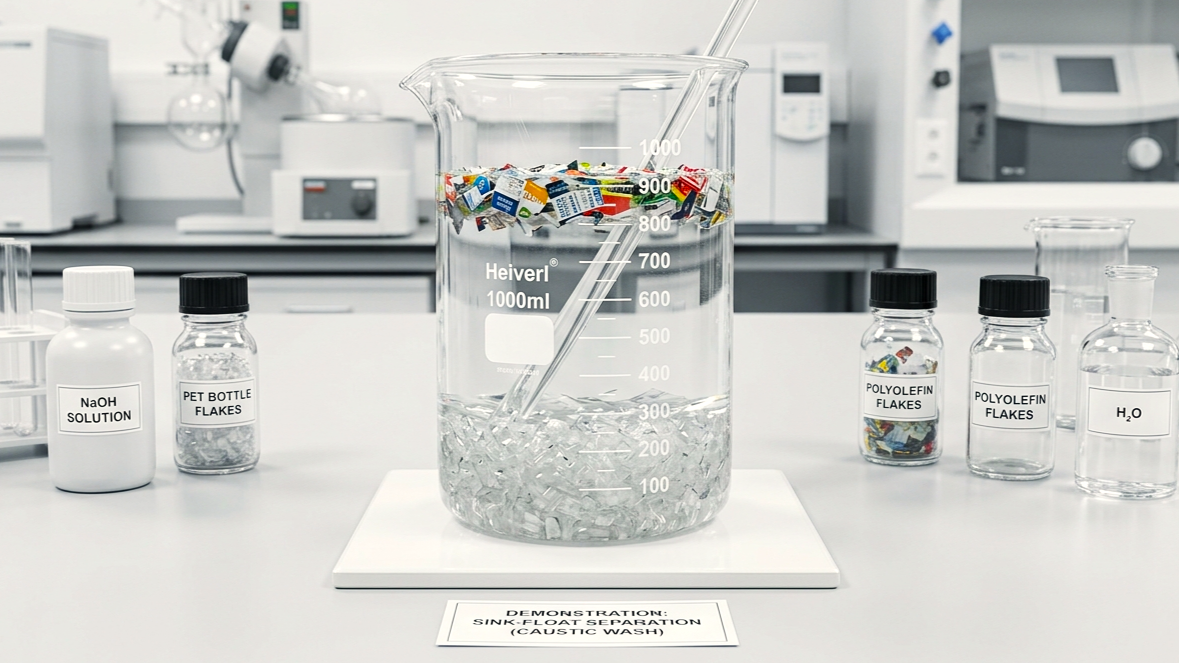
And complexity has consequences. The more dissimilar layers, additives and bonding components a pack contains, the harder it can be for sorting and recycling systems to recover value from it at end of life. As the industry works to build more circular packaging systems, that complexity becomes harder to justify.
The shift to mono-material solutions has been an important step forward. It reflects a growing recognition that packaging must be designed not only for protection and appearance, but also for recyclability and circularity. However, many still rely on laminated, multi-layer constructions within the same polymer family. At Masterpress, we believe the next generation of packaging should go further.
Non-laminated, single-layer structures represent the next step. Rather than simply substituting one material mix for another, they rethink the architecture of the pack itself. With fewer components and no lamination adhesives, they can support improved recyclability and stronger design-for-recycling outcomes.
None of this changes a basic truth: packaging must work. It must run efficiently on filling lines. It must seal reliably. It must protect products through distribution, storage and use. And it must preserve the product experience consumers expect.
This is not change for its own sake. It is a more purposeful approach to packaging design.
For brand owners under pressure to accelerate progress on packaging sustainability, that matters. It opens the door to solutions that are not only more recyclable in principle, but better aligned with a model in which circularity and performance reinforce one another.
Simpler by design. Stronger in value.
As recycling technologies continue to develop across Europe, the long-term value of simplified structures becomes even more compelling.
Improved collection, sorting and recycling systems will naturally favour packaging designed with material simplicity in mind. The fewer unnecessary layers and components involved, the greater the opportunity to optimise end-of-life recovery and improve the economics of circular systems.
Designed with fewer layers and components, this type of structure can support stronger design-for-recycling outcomes while remaining relevant to operational and product-performance requirements. It is a packaging built around greater efficiency by design: fewer components, less processing complexity and a clearer path toward circularity.
For brands, that creates real value:
– a more streamlined packaging structure
– reduced material complexity
– support for recyclability ambitions
– alignment with evolving circular economy expectations and PPWR readiness
– packaging innovation that can strengthen brand positioning
Not every application will require the same solution, and some highly demanding formats may still call for specialised constructions. But across many mainstream FMCG applications, non-laminated, single-layer pouches open up valuable new possibilities.
This is where Masterpress expertise matters most: identifying where innovation is technically viable, commercially relevant and strategically valuable for brands.
Innovation with proof behind it
At Masterpress, innovation is not about theory. It is about creating packaging solutions that stand up to real-world demands.
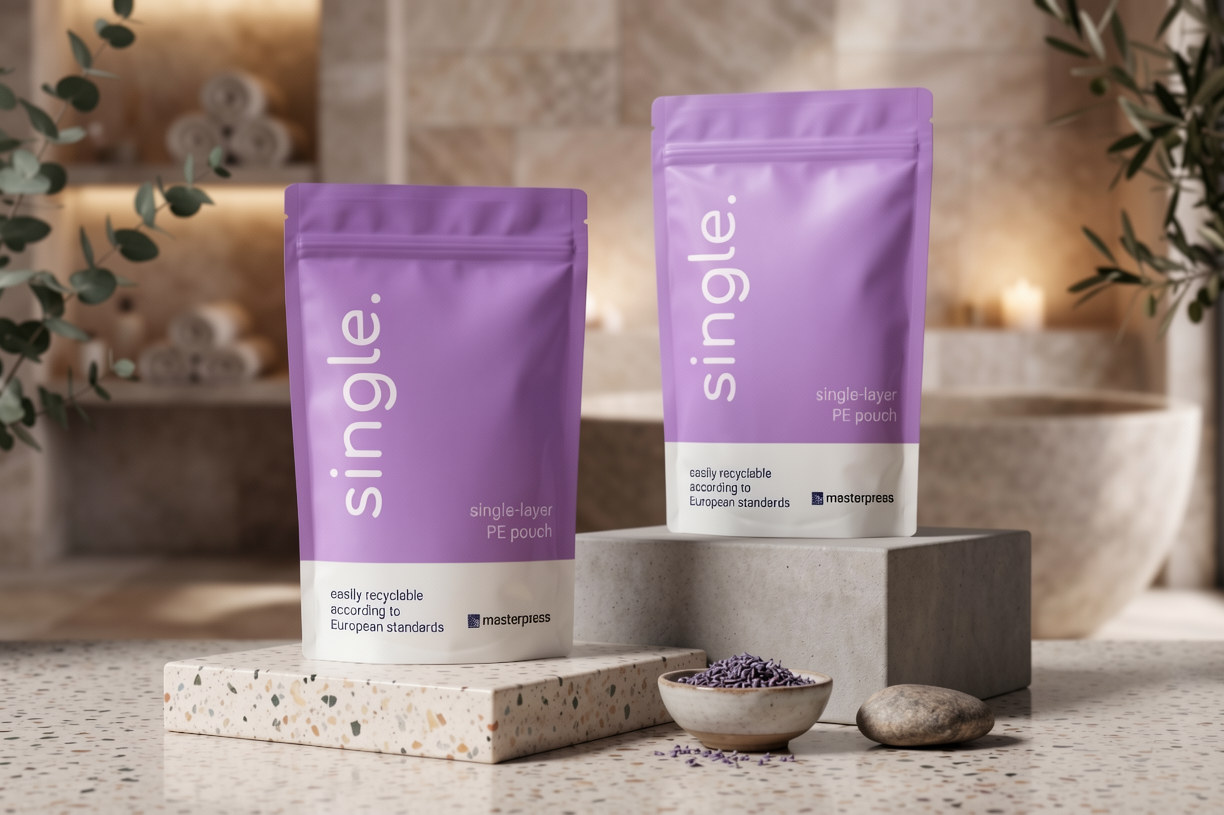
Market confidence depends on proof, which is why validation is central to our approach. Through the EU-funded BeFORE project, Masterpress has developed a single-layer, non-laminated stand-up pouch for soap packaging that is now being tested across the performance criteria that matter most.
The pouch, based on a mono-material PE/EVOH structure, is being evaluated for:
– barrier performance
– mechanical strength
– shelf-life stability
– regulatory safety compliance
– compatibility with automated filling and packaging lines
– recyclability in line with Design for Recycling guidelines
This work reflects Masterpress’ approach to innovation: combining advanced material thinking with practical packaging expertise to help move the market forward.
Built for where the market is going
As recycling systems and material recovery technologies continue to improve, packaging designed with simplicity in mind will be better positioned to succeed. Structures with fewer unnecessary layers, additives and processing steps are more naturally aligned with the direction of travel across regulation, recycling and circular economy strategy.
Masterpress is helping brands prepare for that shift now.
We see non-laminated, single-layer pouches as a strong expression of where the industry is heading: toward packaging designed with circularity in mind from the start.
The future of packaging will not be defined by doing the minimum required to improve recyclability, but by rethinking the structure itself. The shift to mono-material packaging was an important milestone. Masterpress is focused on removing the structural complexity that still remains.